Some myths refuse to die, no matter how often they are disproved. Residents of Lakemba know this better than most. Earlier this year I wrote in AMUST newspaper, debunking some of these tall tales: the supposed swarm of NDIS providers, the host of supposedly “bad” drivers – and the fact that it is an “unwelcoming” suburb. Yet the attacks have not stopped. So let me say it again, and louder: Lakemba has been slandered, and those doing it know, or should know, better.
The viral claim was that Lakemba, population about 17,000, hosts 1,300 NDIS providers: one for every 13 residents. In February, NDIS integrity chief John Dardo told a Senate estimates hearing the claim was misleading.
AAP FactCheck counted just 16 active, registered providers with an office in the suburb. Mr Dardo said Lakemba was not “anywhere near the top 40 suburbs” for NDIS provider saturation. Instead, he said, the highest concentrations are in Port Macquarie, Hervey Bay, the Sunshine Coast, Frankston and Southport: sun-soaked coastal and holiday destinations, and hardly places where Muslims are known to work or reside.
Prominent broadcaster and journalist Antoinette Lattouf and co-host Jan Fran later dissected the lie on their podcast, We Used to be Journos, tracing which outlets fuelled it and concluding the headline figure was out by roughly 8,000 per cent!


None of this has slowed Lakemba’s critics. That same February, Senator Pauline Hanson declared there were “no good Muslims”, then named Lakemba as a place where visitors “feel unwanted”. As a senator, Hanson had every means to check the facts: the Senate’s own estimates hearing had already heard that Lakemba was nowhere near the top 40 suburbs for NDIS providers. Yet she later claimed Muslim communities were exploiting the scheme, a claim the Health Minister, Mark Butler, dismissed as a baseless smear.
Then there is the self-styled online activist who has made Lakemba something of a personal project. He does not deserve to be named here. In January he filmed outside local disability businesses for a video pushing the NDIS myth, which drew more than 219,000 views in four days. In March, weeks after the Senate hearing, he was still telling Sky News there were up to 1,300 providers in Lakemba. He has also branded the area part of a so-called “jihad axis”, recycling decade-old figures, and tried to tie Australia’s largest mosque to extremism. The truth, it seems, is irrelevant.
Critics also cling to an outdated picture of Lakemba being a “Lebanese suburb”. The census tells a different story. In 2001, Lebanon was the leading overseas birthplace, at 7.4 per cent of residents. By 2021 it had slipped to 3.4 per cent, behind Bangladesh (15 per cent), India (8.8), Pakistan (5.3) and Myanmar (4.3).
Islam remains the largest faith, but today’s Lakemba is shaped as much by Dhaka, Delhi and Lahore as by Beirut and Tripoli. And the 2026 Census, taken in August, will no doubt reveal that the shift has gone further still.
I have worked in Lakemba since 2022. As a white Australian who is not visibly Muslim, I have never once felt unwanted. Shopkeepers on Haldon Street greet me with a smile and a handshake. Restaurant owners and staff are equally courteous and welcoming. The shopkeepers, the barbers and the lady behind the sweets counter: unfailingly patient, generous and kind. This is not a suburb that pushes visitors away. It pulls them in.
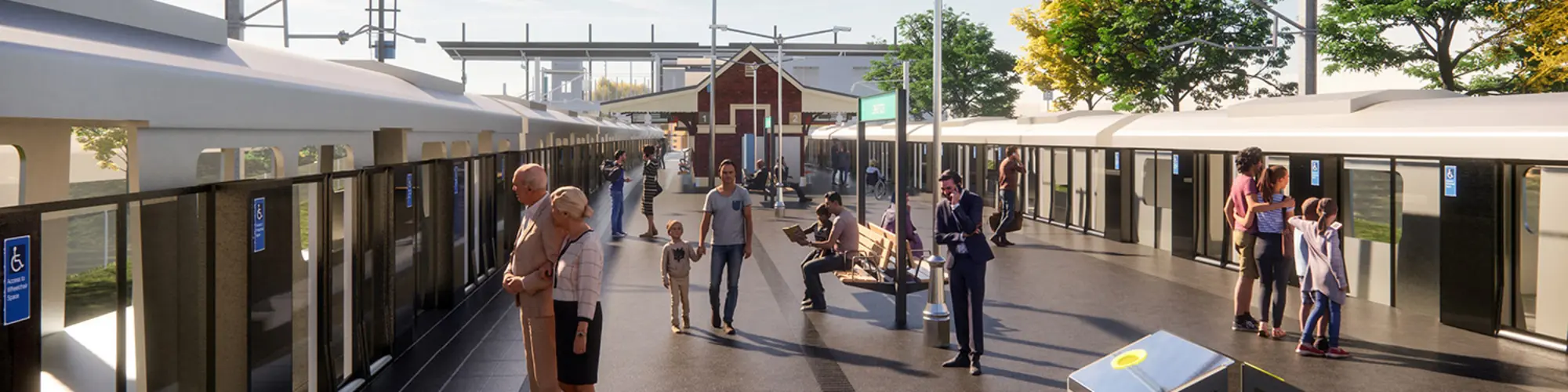
And getting here has never been easier. After two years of replacement buses, the new Metro line through Lakemba opened on Friday, 30 October. When Lakemba Nights returns next Ramadan, visitors will step off a modern, fast, frequent train just metres from Haldon Street and the night-market stalls. Expect the crowd records to be shattered, and the welcome to be just as warm.
Lakemba does not need defending so much as discovering. It is a place of faith and enterprise, of families who have built new lives and businesses that open their doors to everyone. Its critics peddle numbers that just don’t stand up to scrutiny. Its residents offer something far more durable: hospitality.
So to the cynics, come and see for yourself instead of hiding behind a keyboard. Bring an appetite. You will leave with a full stomach, new friends and a story the headlines rarely, if ever, tell.
- About the writer: Since 2022, John Mahoney has held positions as the Lebanese Muslim Association’s Content Editor and more recently, Media and Communications Officer. An award-winning community journalist with AMUST, he is now Minaret Media’s Head of Written Content.
- Feature image: Artist’s impression of Lakemba station in the new ‘Metro era’. (Suppplied by NSW Metro).