For the past few months, I have been living in Makassar. I commenced work as a lecturer in politics and development studies at Hasanuddin University. It’s been a beautiful experience thus far, seeing how Islam is a lived reality in the culture.
South Sulawesi, of which Makassar is the capital and largest city, is known as being one of the regions in Indonesia with the strongest Islamic identity. Despite Islam arriving relatively late (the early 17th Century) in comparison to Sumatra and Java, the sultans and people of the region quickly became among the foremost propagators of Islam throughout much of what is now modern-day Eastern Indonesia.
The sultanate of Gowa, under the leadership of Sultan Hasanuddin (who my university is named after) was also recognised as a national hero of Indonesia for his struggle against Dutch colonialism, when the Dutch East Indies Company (VOC) attempted to enforce a mercantilist policy and prevent other international visitors, such as Arabs, Chinese, Portuguese and other locals from trading in the port of Makassar.
Hasanuddin refused these conditions and fought for an extended period until his defeat by the Dutch in collaboration with a rival sultan.
While I have lived in other parts of Indonesia previously, I have particularly enjoyed my time in Makassar due to the beautiful culture here, much of which involves Islamic norms embedded into the cultures of the two largest ethnic groups in South Sulawesi, the Makassarese and Bugis peoples.


In Makassan culture, the central principle which colours all aspects of life is ‘siri na pacce.’ Siri roughly translates to a combination of honour and shame and pacce is a sense of empathy.
For a Makassan person, if their sense of siri is touched, they can be willing to risk everything in order to revive it. This principle is linked with the second aspect of sympathy for others. This often is expressed in an extremely strong sense of hospitality towards others, particularly Muslim visitors.
I have been told on multiple occasions about people’s willingness to put their own lives at risk rather than face the shame of a guest of theirs suffering harm or to not repay any goodness that another person has ever shown towards them through returning that goodness in their own actions with whatever they have.
Similarly, the Bugis people have their own concept of ‘taro ada, taro gau,’ meaning whatever is said, must be done. If someone gives their word, it is a shameful act to not fulfil their promise.
Living here, you find the straight-forwardness of the people and willingness to speak the truth, which is sometimes misunderstood by people from other regions in Indonesia as being blunt or ‘kasar’. However I find it a beautiful way of expressing Islamic culture.
While I enjoy the Islamic aspects of the culture in Makassar, we also have a significant non-Muslim population, who live peacefully alongside the Muslim majority.
A little over 10% of the population is non-Muslim, most of whom are Christians. These include Torajans from the uppermost part of South Sulawesi, Minahasans from North Sulawesi, as well as significant numbers of internal migrants from East Nusa Tenggara and Papua, the latter two often university students as Makassar is the hub for education for the Eastern regions.
There are many churches for these populations, as well as Hindu temples for the small Balinese community.
While Islam is undoubtedly the dominant influence on the culture, this does not prevent other religious groups from living alongside us here without issue.
While it is much less well known than other parts of Indonesia such as Bali or Lombok, Makassar is a great place for Muslims to live and experience the culture.
For those who are interested in living in a Muslim country, it is perhaps more difficult than locations such Lombok, where it is easier to get by with English than in Makassar, however the Islamic environment is a lot more wholesome.
For those who are foodies also, Makassar is famous among those who know it for its food. Many delicious options such as coto Makassar, sop saudara, pallubasa, jalangkote and the many varieties of seafood are available in every neighbourhood.
The city and its surrounding regions are definitely worth a visit for those looking to experience a new part of the country outside the usual hubs of Bali, Lombok and Jakarta.
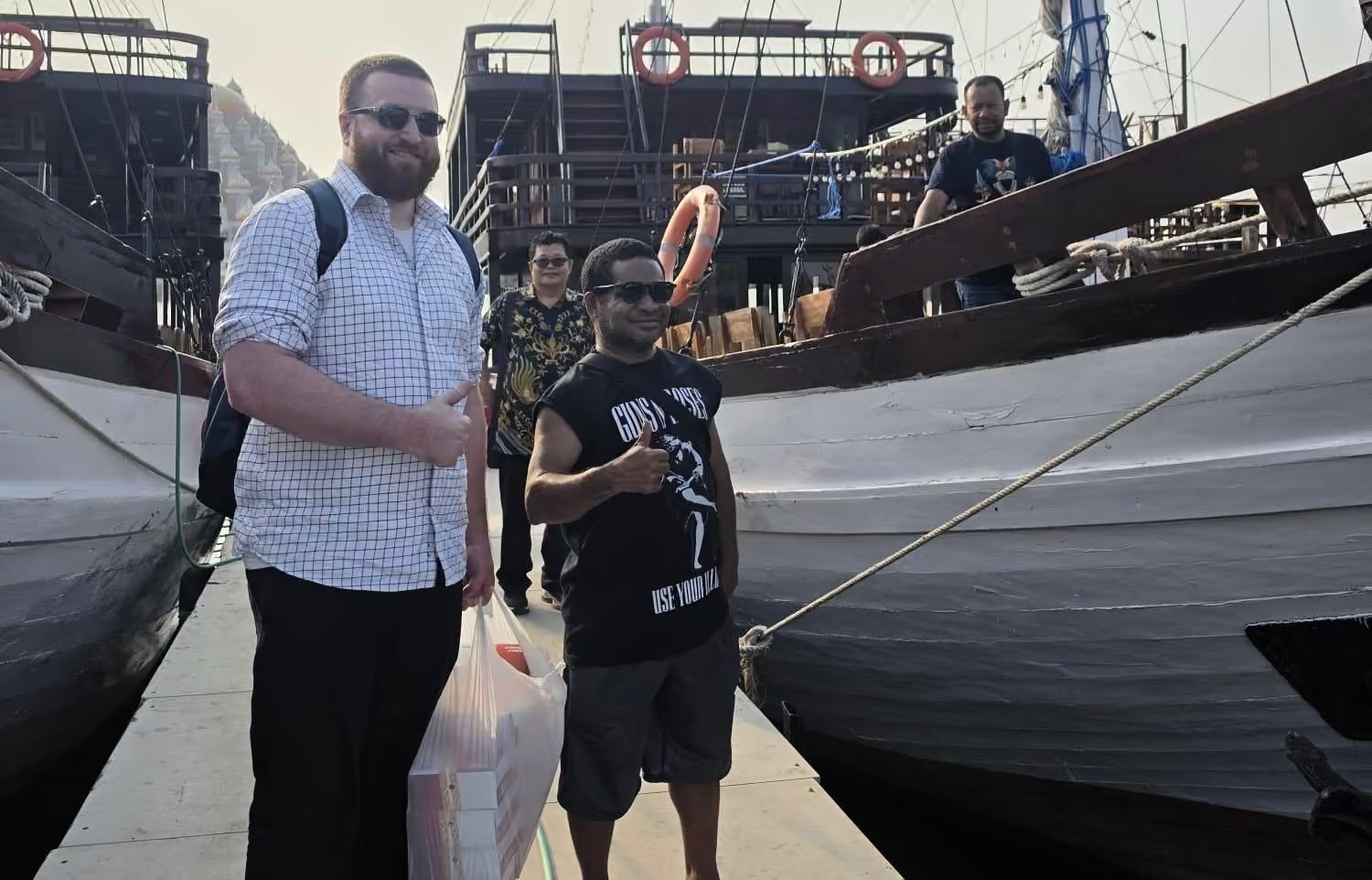
- Peter Lilly is pictured (left) in the feature image.
- (Below) The 99 Domes Mosque at Center Point of Indonesia, Makassar, lit up at night.