

For three years, Australians have watched in horror as Israel has devastated Gaza, killing tens of thousands of Palestinians, destroying entire communities and displacing almost the entire population.
Across Australia, communities have marched, organised, donated, written to politicians and demanded action. Yet despite growing international condemnation, the Australian Government has failed to take meaningful measures to ensure Australia is not contributing to these atrocities.
This raises a fundamental question: If Australia says it opposes genocide, war crimes and illegal occupation, why aren’t our laws strong enough to prevent Australian money, weapons and trade from supporting them?
This is precisely what the Red Lines Package seeks to address.
What is the Red Lines Package?
The Red Lines Package is a groundbreaking legislative proposal designed to prevent Australia from funding, arming or profiting from genocide, war crimes, crimes against humanity and illegal occupation.
Developed by legal experts and civil society organisations, including those advocating for Palestinian rights, the package seeks to close serious gaps in Australian law.
The Red Lines Package Omnibus Bill 2026 brings together four major reforms covering defence exports, investments, genocide prevention and trade with illegal settlements.
The first reform would strengthen Australia’s defence trade controls to prevent Australian weapons, military components and technology from being supplied where there is a serious risk they could contribute to genocide, war crimes or crimes against humanity. It would also introduce greater transparency and oversight of defence exports, helping ensure Australian military supplies are not used to facilitate atrocities overseas.
Why does this matter? Australia is a significant contributor to the global F-35 fighter jet program, supplying components for aircraft used by Israel in its military operations. More than 75 Australian companies participate in the program, with contracts worth more than $5 billion, according to the Department of Defence. Leaked shipping records reported by Declassified Australia show at least 68 shipments of F-35 parts were flown from Australia to Israel on commercial passenger flights between October 2023 and September 2025, bypassing the program’s US and Dutch distribution hubs. Its later reporting puts the documented total at 80 to February 2026, with more recent shipments routed via the United States. The proposed reforms would strengthen scrutiny of defence exports, including how Australian-made components are ultimately used.



The second reform would stop Australian money from financing illegal settlements and serious violations of international law. It would require the Future Fund, superannuation funds and registered charities to divest from prohibited investments, helping ensure Australian taxpayers’ money, retirement savings and charitable donations are not used to finance unlawful occupation or activities contributing to genocide.
Consider Australia’s sovereign wealth fund, the Future Fund. As at 30 June 2026, it held approximately $19.7 million in shares in Elbit Systems, Israel’s largest publicly listed weapons manufacturer, alongside $114.6 million invested in Palantir Technologies, whose surveillance and military technology has attracted serious human rights concerns. These are public investments, made through a fund established to benefit Australians. The reforms seek to ensure our collective wealth is not invested in activities that contribute to serious violations of international law.
A third reform would establish a comprehensive framework for genocide reporting, prevention and accountability. Major businesses, government entities and other institutions would be required to identify, report on and address risks that their activities could contribute to genocide. An independent Australian Anti-Genocide Commissioner would provide oversight. This would help identify and address dangerous commercial relationships before they contribute to atrocities, rather than waiting until the damage is done.
Finally, the package would prohibit trade in goods and services connected to illegal settlements in occupied territories, including the occupied Palestinian territories. Australia should not allow businesses to profit from settlements that violate international law or from the exploitation of occupied land and resources.
This is hardly a radical proposition. On 8 September 2026, twelve countries, including the United Kingdom, France and Canada, announced they would introduce or support restrictions on trade with illegal Israeli settlements, with the UK, France and Canada committing to national bans on settlement goods. Australia was conspicuously absent.
Together, these four reforms would turn Australia’s international legal commitments into practical, enforceable domestic laws.
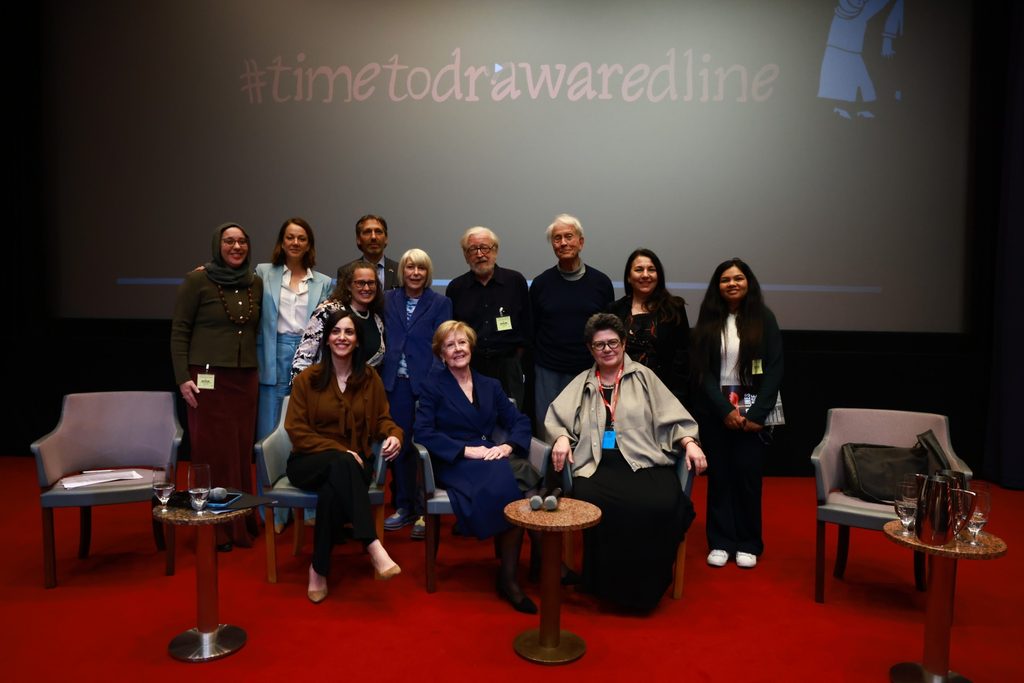
launch in Parliament House in Canberra on 15 September
Why does it matter?
Australia has signed international treaties committing it to prevent genocide and uphold international humanitarian law. But these commitments mean little if Australian businesses, financial institutions and government agencies can continue activities that contribute to serious violations.
The devastation in Gaza and accelerating illegal settlement expansion in the West Bank have exposed the consequences of these gaps in our laws.
The Red Lines Package would shift Australia’s approach from responding to atrocities after they occur to preventing Australian involvement in the first place.
Importantly, these reforms would apply universally, regardless of which country is responsible or who the victims are. Whether in Palestine, Sudan, Myanmar or elsewhere, Australia should never enable genocide or war crimes.
For Muslim Australians, and indeed all Australians who believe in justice, this is about ensuring our government upholds the same principles it demands of others.
International law cannot be applied selectively. Nor should preventing complicity in atrocities depend on the political preferences of whichever government happens to be in power.
What has happened in Parliament?
In September 2026, the Red Lines Package Omnibus Bill was introduced into Federal Parliament by independent MP Dr Sophie Scamps and Senator David Pocock, with support from Andrew Wilkie, Senators Lidia Thorpe and Fatima Payman, and the Australian Greens.
Its parliamentary launch brought together leading legal experts, human rights advocates and community organisations, demonstrating the breadth of support for these reforms.
There is growing political momentum. The package has reportedly generated extensive discussion within the Labor Party.
However, the Albanese Government and the Coalition voted together against referring the legislation to a Senate committee inquiry, denying the community an important opportunity to have its voice heard. The legislation remains before Parliament, but stronger political pressure is needed to advance it.
While other countries are beginning to translate their commitments to international law into concrete action, Australia continues to rely heavily on statements of concern and diplomatic condemnation.
Words alone will not prevent atrocities. We need laws that make complicity harder, impose real consequences and ensure accountability, and take Ministerial discretion out of the implementation of our international law commitments.
How can our community help?
The Red Lines Package offers an opportunity to turn community outrage into lasting legislative change.
We need Australians, particularly those who have been demanding action on Palestine, to help build the political pressure necessary to secure these reforms.
Write to your local MP and senators. Ask them to publicly support the Red Lines Package and demand a parliamentary inquiry so the legislation receives proper scrutiny.
Encourage your mosque, community organisation and local networks to endorse and promote the package. Sign the parliamentary inquiry petition and share the campaign with friends and family.
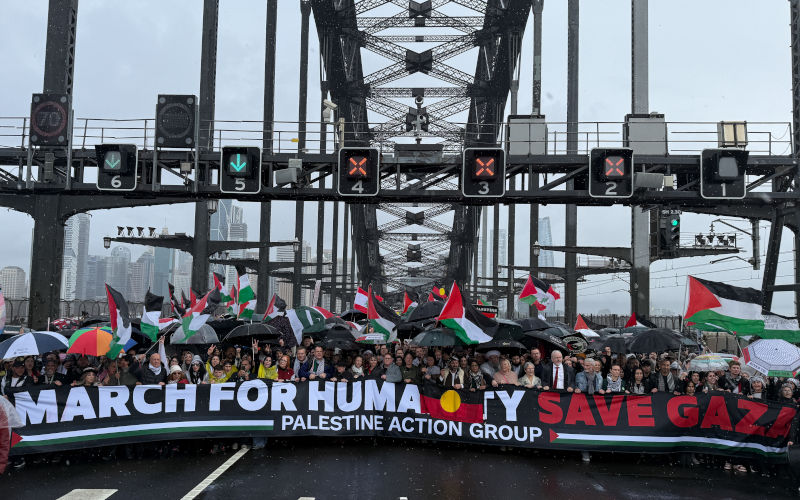
The Australian Muslim community has played an important role in sustaining public pressure for Palestinian rights. That collective voice is needed now more than ever.
We cannot undo the atrocities already committed. But we can demand laws that stop Australia from helping to finance, arm or profit from them.
It is time for Australia to draw a red line, and mean it.
Find out more and take action: www.redlinespackage.com.au
- Maria Poulos, author of this Opinion piece, is the Campaigns and Political Engagement Lead, Australia Palestine Advocacy Network (APAN).