
Daylight saving came into effect in NSW, Victoria and Tasmania on Sunday, 4 October, when clocks moved one hour forward.
It’s a small ritual we repeat every year without giving it too much thought, but it actually has a longer and more contested history than most of us realise.
Australia first experimented with daylight saving during World War I, back in 1917, as a wartime measure to conserve fuel and boost productivity. It made a brief comeback during World War II for similar reasons, before disappearing once again once the war ended.
Being born in 1958, the ‘modern’ version that I grew up with began in Tasmania in 1967-68, introduced to ease pressure on the state’s electricity grid during a drought that had crippled hydroelectric power.
New South Wales, Victoria and South Australia followed suit in the early 1970s, while Queensland, Western Australia and the Northern Territory have refused to become involved.
It’s a divide that still exists today, kept alive by genuinely different circumstances across the country.
Those in favour point to the extra hour of evening daylight in summer, a boost for retail, sport and family time after work, along with modest energy savings.
Those against point to the disruption for young children’s sleep, the strain on dairy and farming routines tied to natural light and the headache of three different clocks running across the country for half the year.
Queensland’s size and tropical climate, for instance, mean an extra hour of daylight at the end of the day holds far less appeal than it does further south.
It’s the kind of debate where everyone has a reasonable point, which is probably why the divide has lasted more than fifty years.


For Muslims though, this twice yearly shifting of the clock carries a dimension you won’t hear much about in the mainstream conversation.
Unlike most of daily life, which runs according to the fixed hours on a clock, our worship is anchored to the actual movement of the sun.
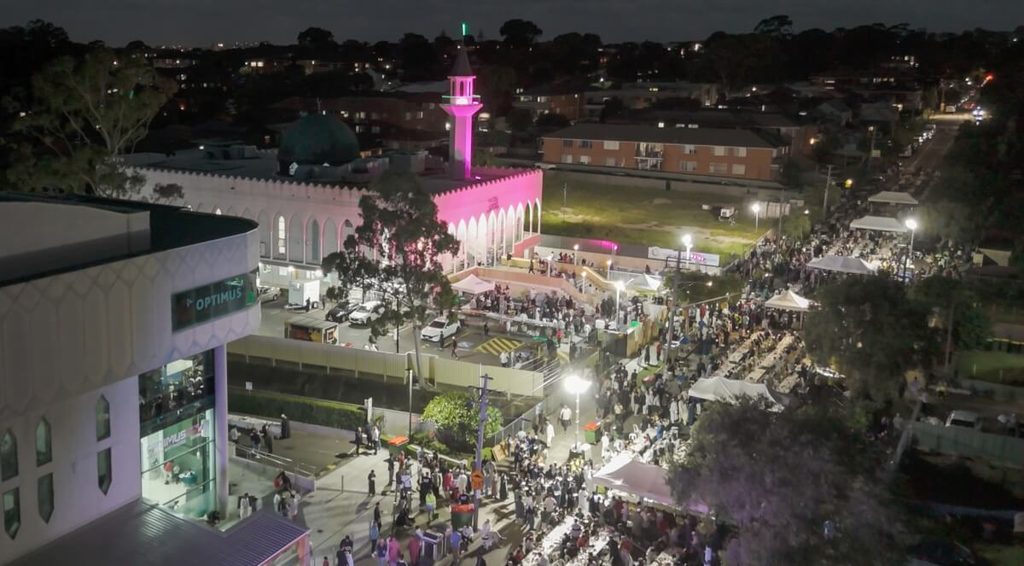
2026 LMA Community Iftar to break it together (Photo LMA Creative Team)
Rather than being dictated by convention, our five daily prayers are set by the sun’s genuine position in the sky, so whether the clocks move forward or back, the obligations of prayer and fasting simply follow the sun, completely indifferent to legislation.
This becomes especially relevant when we look ahead to Ramadan 2027, less than four months away and expected to commence around Sunday, 7 February, with the first fast falling on Monday, 8 February (subject to change).
Landing in the heart of the Australian summer and squarely within daylight saving, next year’s Ramadan is going to bring some of the longest fasting hours many will have experienced.
In Sydney, sunrise in early February sits around 6:20am and sunset around 7:55pm, which means Fajr will be well before 5am and Maghrib won’t arrive until close to 8pm. That’s a fasting window stretching to roughly 15 hours a day.
Long days of fasting have always been part of the test and the beauty of Ramadan, a reminder that our worship isn’t meant to be convenient, it’s meant to draw us closer to Allah through patience and sacrifice.
As we count down to Ramadan, may Allah grant us the resilience, the health and the sincerity to make the most of every long, blessed day.